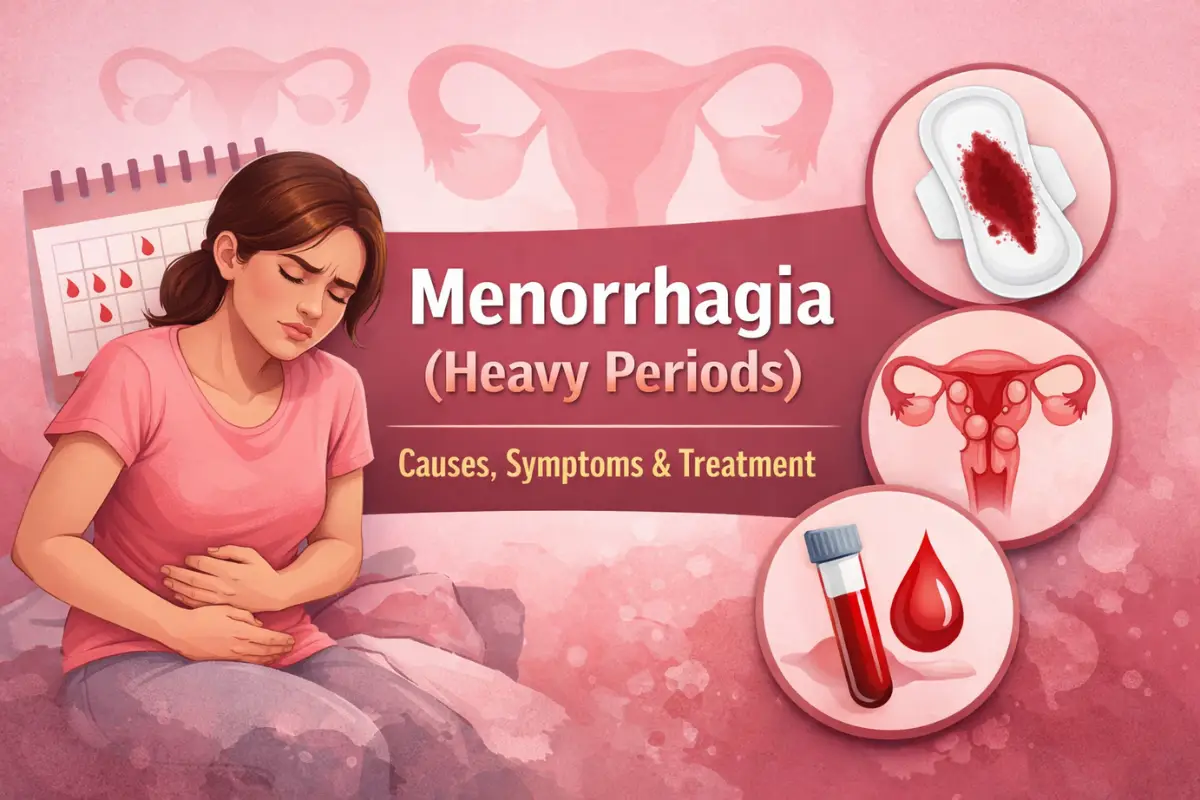
Menorrhagia (Heavy Periods): Causes, Symptoms & Treatment
Heavy periods are more than just inconvenient — they can interfere with your daily life and sometimes signal an underlying health issue.
If you find yourself constantly changing pads, waking up at night due to bleeding, or feeling drained during your period, this could be a sign of menorrhagia, also known as heavy menstrual bleeding.
In this guide, you’ll learn:
- What menorrhagia is
- Common causes
- Symptoms to watch for ⚠️
- When to seek help
- Treatment options
What Is Menorrhagia?
Menorrhagia refers to abnormally heavy or prolonged menstrual bleeding.
While every woman’s cycle is different, bleeding is considered heavy if it:
- Soaks through one or more pads/tampons every hour
- Lasts longer than 7 days
- Interferes with your daily activities
⚠️ Why You Should Not Ignore Heavy Periods
Heavy periods should never be taken lightly.
They can:
- Be a sign of an underlying medical condition
- Lead to anemia (low blood levels)
- Affect your quality of life
- Cause fatigue, weakness, and dizziness
👉 Your period is a reflection of your health — changes matter.
Symptoms of Heavy Menstrual Bleeding
Menorrhagia looks different for every woman, but common signs include:
- Soaking through pads or tampons very quickly
- Using multiple pads at once to prevent leakage
- Waking up at night to change sanitary products
- Passing large blood clots
- Feeling tired, weak, or dizzy
- Lower abdominal or back pain
What Causes Heavy Periods?
There are several possible causes of heavy menstrual bleeding:
1. Hormonal Imbalances
Hormones like estrogen and progesterone regulate your cycle. When they are imbalanced, your uterine lining may build up excessively, leading to heavy bleeding.
2. Uterine Fibroids
Non-cancerous growths in the uterus that can cause prolonged or heavy periods.
3. Polyps
Small growths in the uterus that can lead to irregular or heavy bleeding.
4. Endometriosis and Other Conditions
Conditions affecting the uterus can contribute to heavy bleeding.
5. Adenomyosis
A condition where the inner lining of the uterus grows into the muscle wall.
This can cause:
- Heavy bleeding
- Painful periods
- Pelvic discomfort
6. Hormonal Conditions
Conditions like thyroid disorders or Polycystic Ovary Syndrome (PCOS) can disrupt your cycle and cause heavy bleeding.
⚠️ When Should You See a Doctor?
Seek medical help if you:
- Bleed heavily for more than 7 days
- Feel dizzy or extremely weak
- Pass large clots frequently
- Have sudden changes in your cycle
- Experience severe pain
👉 Early diagnosis makes treatment easier and more effective.
How Is Menorrhagia Diagnosed?
Your doctor may:
- Ask about your symptoms and cycle history
- Perform a pelvic examination
- Recommend tests such as:
- Blood tests (to check for anemia)
- Ultrasound (to detect fibroids or abnormalities)
- Other tests if needed
Treatment Options for Heavy Periods
Treatment depends on the cause.
1. Non-Hormonal Medications
- Help reduce bleeding
- Often taken during your period
2. Hormonal Birth Control
- Pills or hormonal IUDs
- Help regulate your cycle and reduce bleeding
3. Treating Underlying Conditions
Managing conditions like fibroids or hormonal disorders can restore normal flow.
4. Surgical Options (Severe Cases)
- Procedures like D&C
- In extreme cases, hysterectomy
Possible Complications of Heavy Periods
If left untreated, menorrhagia can lead to:
- Anemia (low red blood cells)
- Chronic fatigue
- Disruption of daily activities
- Fertility challenges
- Emotional distress
Frequently Asked Questions
1. How heavy is too heavy for a period?
A period is considered heavy if you need to change pads or tampons every hour, bleed for more than 7 days, or pass large clots frequently.
2. Why is my period so heavy and clotty?
Heavy, clotty periods may be caused by conditions like fibroids, hormonal imbalances, or PCOS.
3. Is a heavy period normal?
While some variation is normal, excessively heavy bleeding is not and may indicate an underlying issue.
4. Can heavy periods be treated?
Yes. Treatment depends on the cause and may include medications, lifestyle changes, or medical procedures.
Final Thoughts
Menorrhagia can feel overwhelming, but you’re not alone — and it’s treatable.
The key is not to ignore the signs.
If your period is affecting your daily life, it’s time to listen to your body and seek help.